How to Use This Book
How to read this series, where to start and four reading paths
35.1 How to read this series
Psychology for Everyone is an educational guide. From first principles to the living brain — with a field guide to distress, counselling, the five senses and five elements, and Indic healing arts.
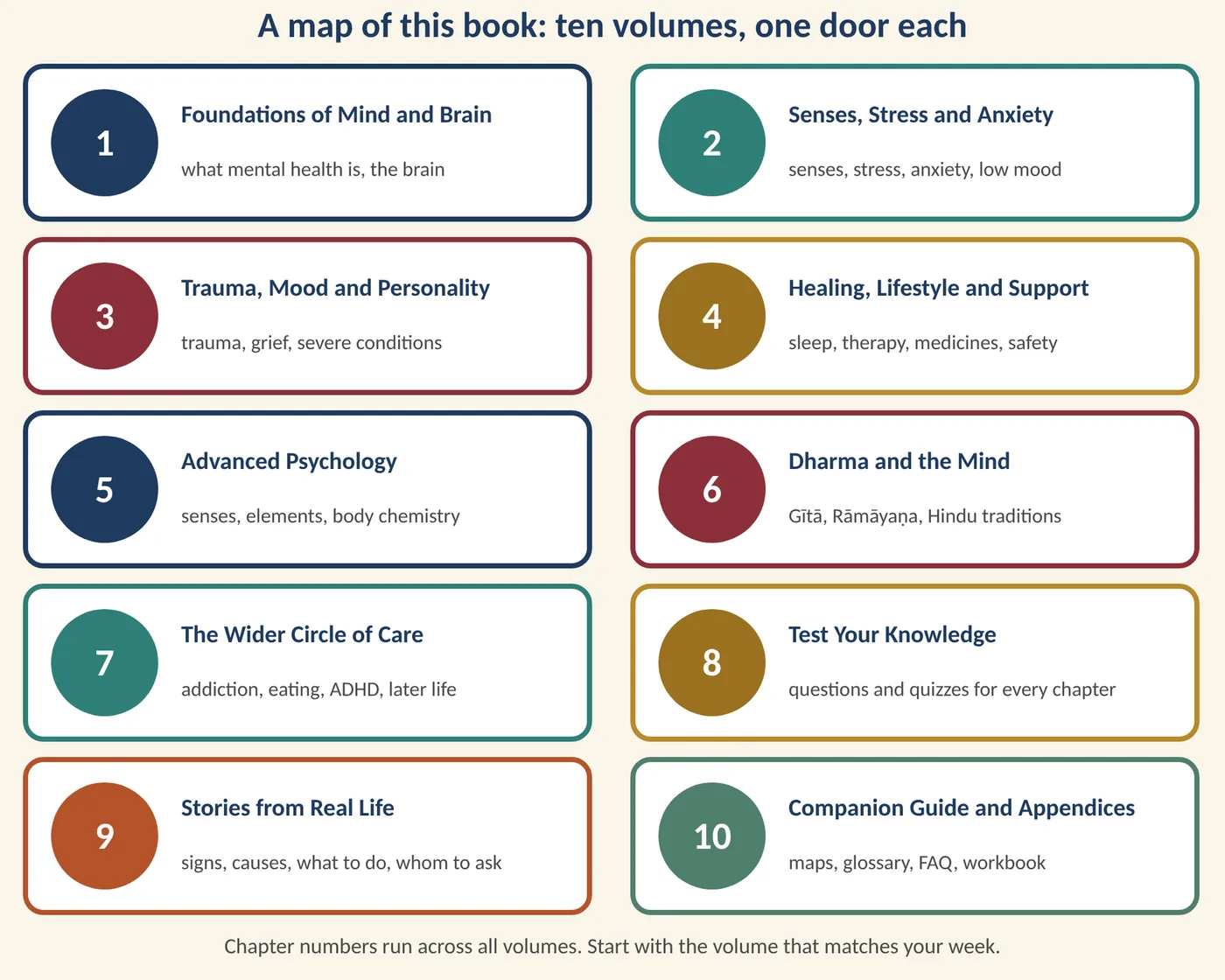
Figure 35.1 A map of this book: ten volumes, one door each.
Nothing here can tell you what you have. Overlap is the rule. If distress is heavy or safety is in question, seek professional and emergency help.
This book is written only to spread awareness and basic understanding. It is not a medical book for self-diagnosis, self-treatment, or changing any medicine. It does not replace advice, diagnosis, counselling, psychotherapy, treatment, or medicines from a qualified psychiatrist, physician, or psychologist.
Healthy food, regular sleep, physical activity, family support, spiritual practices, and counselling may support wellbeing. They must not be treated as substitutes for professional care when a disorder is present.
The series title is Psychology for Everyone - A Mental Well Being Series. Tagline: Take care of mind and mood. Living edition: psychologyforeveryone.in. Feedback and corrections are welcome at myadvisorfriend@gmail.com.
Trusted information
-
NIMH: nimh.nih.gov. WHO mental health: who.int/health-topics/mental-health. APA: apa.org.
35.2 Four reading paths
Your living edition was planned as a site with articles, a brain atlas, glossary, quizzes, a Big Five sketch, thinkers, and studies with ethics attached. The four paths:
-
First principles — what the field is, how it began, how it knows (Chapters 1–2).
-
The living brain — nerves, cells, lobes, senses, sleep (Chapters 3–4, 6, 13, 19, 21).
-
A person among people — learning, memory, development, personality, social mind (Chapters 5, 12, 17).
-
When the mind hurts — emotion, disorders, therapy (Chapters 7–11, 14–15, 18, 22).
Dharma and healing techniques sit in Chapters 20, 23 and 24.
Volume 7 (Chapters 25–34) is the wider circle of care: addiction, eating, neurodiversity, digital life, work and study, pregnancy and birth, later life, rights, assessment and relationships.
Volume 8 is Test Your Knowledge.
Volume 9 is Stories from Real Life: several stories for every chapter, each with signs to notice, causes, what to do, whom to consult and how to talk.
Volume 10 is this companion guide. Use this chapter for quick reference.
All 35 chapters · 183 stories from real life · 61 Hindu shloks for the mind · Psychology for Everyone – A Mental Well Being Series